
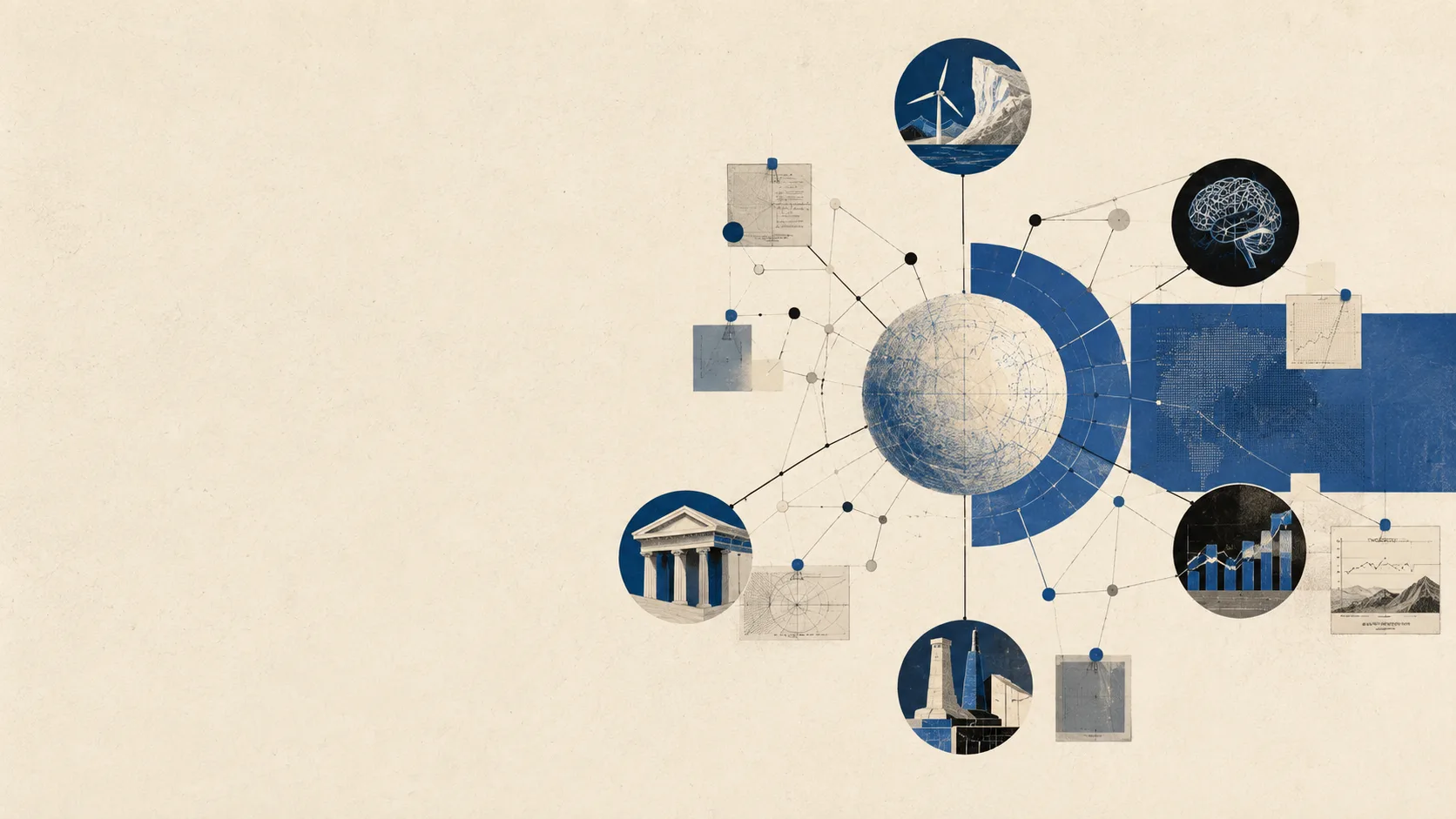
Public forecasts by frontier lab leaders about when systems matching or exceeding human cognitive capability will arrive, and the mechanisms those forecasts depend on.
好演讲,读成好文章。
议题
浏览 AI 议题,查找相关峰会演讲。先确认议题范围,再比较带有归属的观点,并在引用前回查原始来源。
此处按议题名称匹配。站内搜索覆盖演讲标题、摘要和已索引的主张。查找确切原话,请核对原始录像或逐字稿。
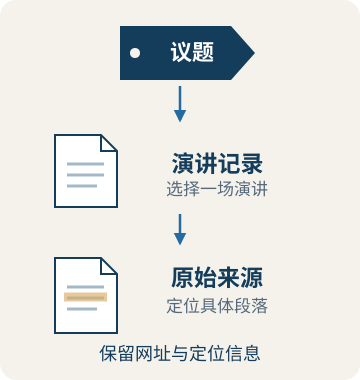
浏览已有公开演讲的议题
议题按已记录的分类层级排列,不代表重要性或证据强弱。有定义时先阅读定义;定义缺失时,应先查看相关演讲再判断范围。
第 1 层议题
The practice of taking model-based systems from working prototype to production reliability — evaluation, fine-tuning, serving cost and the trade-offs between them.
How legal systems assign responsibility, rights and liability for systems that act without a human deciding each action.
The effect of AI systems on employment, task composition and the structure of entry-level work.
The application of AI systems to scientific discovery — protein structure, weather, materials and drug design — as distinct from general-purpose language capability.
Systems in which language models plan, call tools and carry out multi-step tasks rather than only generating text in response to a prompt.
Network coverage, spectrum and the economics of reaching places terrestrial infrastructure does not serve.
The electricity, grid capacity and siting constraints that determine where AI infrastructure can physically be built.
How organisations measure the output and experience of software teams, and how AI tooling changes what those measures mean.
How large organisations move AI systems from pilot into governed production, including data foundations, access control and operating model changes.
Measuring and improving how consistently model-driven systems produce correct results across repeated runs.
AI systems that perceive and act in the physical world — robotics, autonomous vehicles and the simulation stacks used to train them.
比较观点前,先确认议题范围
选择定义与研究问题相符的议题。一个宽泛主题可能包含不同的技术或政策问题。相关议题提供另一条检索路径,但彼此关联并不说明两个术语含义相同。
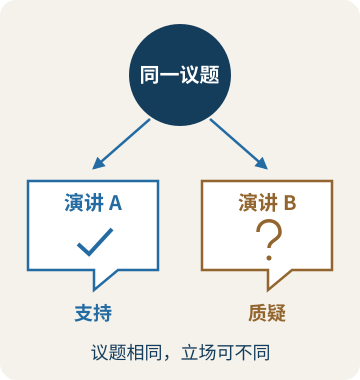
同一议题标签把讨论归到一起,并不能证明嘉宾意见一致。请结合各场演讲的语境阅读具体主张,并保留其性质。
- 报告的事实或结果
- 核对陈述依据、单位和适用条件。公司自述的结果应归于相应嘉宾或公司。
- 观点或建议
- 保留嘉宾姓名及其论证依据。建议本身并不证明已测得某种结果。
- 预测
- 保留嘉宾给出的未来时间、前提和不确定性。经过摘要整理的预测仍然是预测。
比较原始证据,识别重复转述
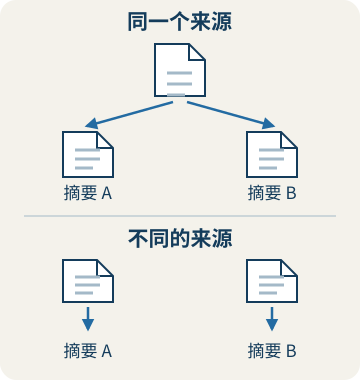
将看似相近的主张追溯到原始材料。两篇来自同一录像的摘要共享一个来源。不同来源链接提供了比较材料,但仍需核对它们是否依赖同一份报告或公告。
引用主张时,记录嘉宾、演讲标题、已确认的演讲日期、原始来源网址,以及时间戳或页码。来源上传日期与演讲日期应分别记录。演讲页提供引用工具时可使用,但引用前仍须核对具体段落。
如果缺少来源或定位信息,请查找主办方的原始录像或文档。在找到具体段落前,可将该记录用作继续研究的线索,不要把摘要当作嘉宾原话引用。
方法与来源
本指南说明当前议题与演讲记录的使用方法。议题定义及可见主张取决于目录已有材料;本目录并非峰会全部讨论内容的完整记录。图示表达阅读关系,不表示数量或测量所得的一致性。
阅读来源与核验方法W3C SKOS 入门,2.3 节 (2009 年 8 月 18 日)区分概念之间的层级关系与关联关系。本指南据此解释范围,不表示本目录的分类体系获得认证。
W3C PROV 模型入门,3.6 与 3.4 节 (2013 年 4 月 30 日)解释派生与归属关系。本指南据此绘制来源关系图;来源可追溯本身并不能证明主张为真。
来源查阅于 2026 年 10 月 18 日。本次更新增加目录搜索与证据阅读指南,不改变已收录演讲的日期。
如发现议题归类不当或主张缺乏依据,请提供记录网址、建议修正内容及原始来源的时间戳或页码,并附上能说明问题的定义或段落。
报告议题或来源问题