
Great talks. Insightful articles.
Organizations
Find organizations represented at global summits. Trace speakers, event-time affiliations and original sources before citing a claim.

Follow an organization to the speaker and source
Organizations in this directory connect you to the people who spoke under their affiliation and the sessions in which they appeared. Open a record, choose a talk, then check its source before reusing a statement.
A stage appearance identifies a connection at an event. Attribute the words to the named speaker unless a separate organizational source supports a broader attribution.
Browse summit talks directly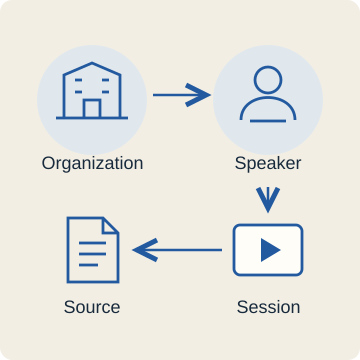
Organization records
Records are listed alphabetically and link to associated talks. Coverage reflects the sessions in this archive; absence from the directory does not establish that an organization missed an event.
Keep the affiliation attached to the event date
Use the role and organization shown for the session you are citing. A speaker may have changed employers or held several affiliations; a current biography alone cannot settle whom they represented at an earlier event.
Check the event programme, the recording’s introduction or a dated organizational biography. If they disagree, keep the uncertainty with the attribution and send the conflicting sources for review. Parent organizations and subsidiaries should remain distinct unless the source identifies them as the same speaker affiliation.
Check the speaker record and related appearances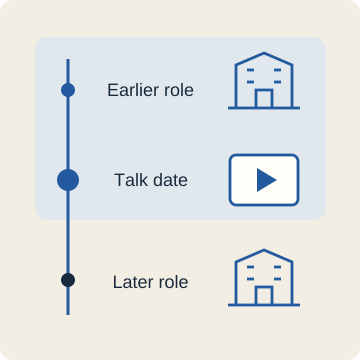
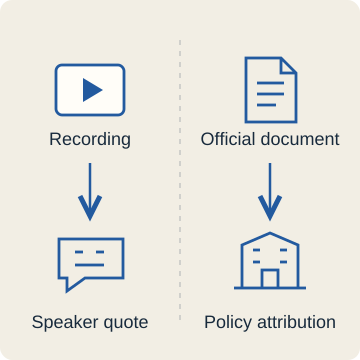
Separate the speaker’s words from an organizational commitment
A recording can establish that a person made a statement. To describe it as organizational policy, find a dated policy document or an official statement that supports that attribution.
On a panel, check who actually spoke. A moderator’s question, another panellist’s answer and a company representative’s reply need separate attribution. Preserve qualifications such as “we expect” or “subject to approval” when summarizing a forecast.
An announced plan also needs later evidence before you describe it as a completed result. Record what was said at the summit, then cite the follow-up separately if you assess what happened.
Carry the source trail into your citation
An organization page helps you find material. Cite the session and the original source for the passage you use, keeping the organization page as a navigation reference when helpful.
- Record the speaker, session title, summit edition and event date. Keep the title and affiliation used for that appearance.
- Save the original recording or document URL and the relevant timestamp, page or section. Keep the upload date separate from the event date when they differ.
- Use wording that preserves the statement’s scope. If you add an organizational document or later outcome, give it its own source and date.
Method and sources
This guide explains how to use the directory’s organization, speaker and session links. Its attribution advice is an editorial method; it does not certify individual affiliations or verify the truth of every statement in the archive.
ORCID’s affiliation documentation defines role titles and affiliation start and end dates. It informs the distinction between a dated role and a current profile; it does not verify summit records.
MLA’s online lecture citation example identifies the presenter, lecture title, hosting site, posting date and URL. Published in 2018 for the eighth edition, it is used here for source fields rather than as a current style requirement.
Sources consulted 18 October 2026. Guide updated October 2026; session and organization dates remain record-specific.
To flag a mistaken organization or affiliation, include the affected page URL, speaker, summit edition and a dated source. For a misattributed quotation, add the exact passage and its timestamp or page locator.
Report an organization or attribution error