
Amazon Web Services annual conference, where the company sets cloud and AI platform direction and its own engineering organisation presents operating practice.
Great talks. Insightful articles.
Summits
Browse summit series, choose an edition and find indexed talks. Check official sources before citing a session.
Choose the edition before the session
A summit series groups recurring events under one name. Open a series below, choose the edition that matches your research, then select a talk. Check the edition’s date and organizer, especially when an event has several locations or similarly named sessions.
Already know a title or speaker? Search the catalogue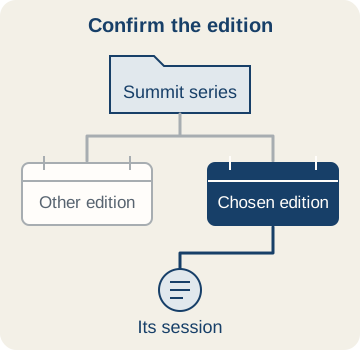
Summit series in the index
Open a series to see its editions. The edition and talk counts describe records in this index; they are not the organizer’s total programme or a ranking of event quality.
Google's annual developer conference, where the company sets out platform direction across Android, Chrome, Cloud and its Gemini model family.
Microsoft's annual developer conference, where the company sets platform direction across Azure, developer tooling and its AI stack.
The World Economic Forum's flagship gathering, where heads of state, executives and researchers debate the year's economic and technological agenda on the record.
The mobile industry's annual gathering, where operators, equipment makers and regulators set direction for connectivity infrastructure.
NVIDIA's developer conference, where the company sets out its accelerated-computing roadmap and the platform decisions that downstream AI infrastructure is built against.
Check what the edition actually covers
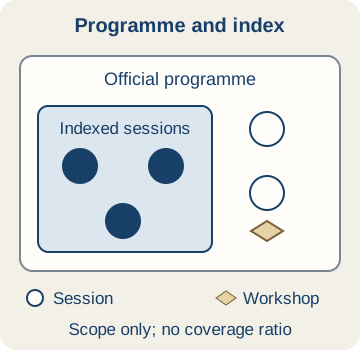
A missing talk in this index does not show that the session never happened. Compare the edition’s indexed talks with the organizer’s programme and its available recordings. An edition source can establish the event context without supporting every session’s summary.
Keep session formats separate when comparing editions. A keynote, workshop and panel can address the same topic with different aims. An agenda entry also does not establish that a public recording exists. Check the source linked to the individual talk before planning to quote it.
Google I/O’s official 2025 catalogue separates keynotes, sessions, workshops and other learning formats. It is an example of organizer navigation, not a list of everything indexed here.
Check the passage before citing the talk
Use an agenda to check the scheduled session identity. Use the original recording or a reliable transcript to check spoken wording, and a slide or report to check material on its own page. The source must support the particular statement you want to reuse.
- Match the session title, edition and speaker, including their role at the time of the talk.
- Open the original source and locate the passage with a timestamp or page number. Read or watch the surrounding context.
- Read the source and human-review disclosures separately. A verified source identifies provenance; it does not validate a forecast or company claim.
- Retain the source URL, locator and session details with your reference. On a talk page, check those details before using Cite.
Keep the session date separate from the recording’s upload date and this guide’s update date. For a year-to-year comparison, check both editions’ sources and compare the same kind of session; a later upload does not establish a later speech.
Find a talk and open its source record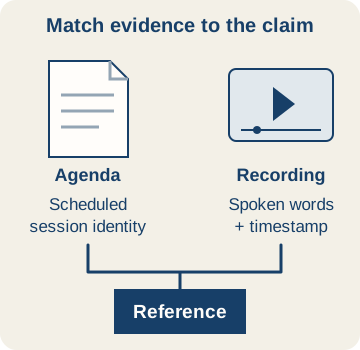
Method and sources
This guide explains the existing series, edition and talk structure and the source checks in our methodology. Counts come from indexed records. Source availability and editorial review can vary by record; check the individual page.
Read the sourcing and citation methodologyMicrosoft’s guide to watching Build 2025 describes schedule and on-demand navigation for that edition. Like the Google catalogue above, it provides an official route into source material, without establishing this index’s completeness.
Official navigation examples consulted 18 October 2026. This guide’s update date does not change the dates of the underlying events or records.
For a wrong edition, broken source or missing session, include the affected page URL, event and edition, the field or passage to check, and an official source with a locator where available. The report page explains how to send a correction or source replacement.