

Senior Applied Scientist, Generative AI Innovation Center
Great talks. Insightful articles.
Speakers
Find summit speakers and follow their appearances to talks and original sources. Check event-time roles and attribute each statement before you cite it.
Follow a person to the session
Choose a speaker to open their appearance timeline, then open the relevant talk for the original source and the passage you need. A profile citation identifies a person’s page; a statement needs a session and source location.
Browse summit talks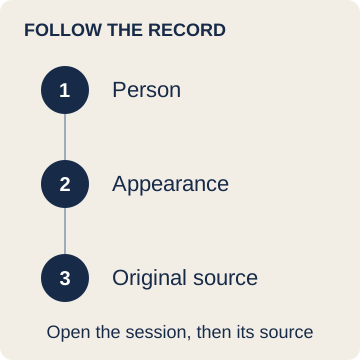
Speaker directory
People with published talk records appear here. Featured records appear first, followed by name; placement is not a ranking of expertise.
Product Manager, AWS Marketplace
Vice-Chancellor
Senior Solutions Architect
Partner Director, Foundry Agent Platform
Founder
Content Understanding
Founder and Chief Executive Officer
Lead, Gemini App, AI Studio and Google Labs
Product Manager, Visual Studio Code
Head of Product
Professor of Management and Global Economics
Chairman and Chief Executive Officer
Head of Search
Product Lead, Google AI Studio
Editor in Chief
Chief Executive Officer
Chief Executive Officer
Microsoft
Microsoft
Microsoft
Co-Founder
Senior Manager, Research and Analytics, Next Gen Stats
Antigravity
Senior Director, Azure Data and AI
Technology Leadership
Chief Executive Officer
Chief Executive Officer
Managing Director
Lead, Developer Transformation
Senior Solutions Architect
Chief Executive Officer
Chief Architect, Office of the CTO
Microsoft
President and Chief Executive Officer
General Manager, App Development
Firebase
Solutions Architect
Executive Chairman
Senior OpenSearch Specialist Solutions Architect
Entrepreneur
Lead Architect
Developer Relations
Head of Engineering, Product and Design
Global Energy and Climate Innovation Editor
Editor-in-Chief
Use the role held at the event
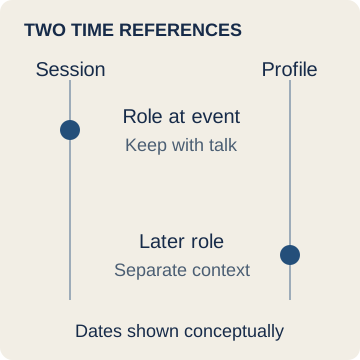
A speaker’s profile header may show a current title and organization. For a past statement, use the title and organization listed beside that appearance. Keep the event date separate from the recording’s upload date and this guide’s update date.
If identity or affiliation is unclear, compare the official session page or agenda with the recording’s introduction. An agenda can establish who was scheduled; the recording establishes who actually spoke. A shared name alone is insufficient to merge two people.
Attribute the speaking turn
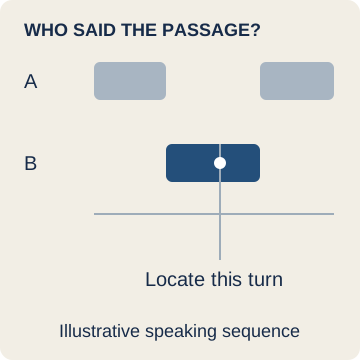
On a panel, a claim belongs to the person who made it. Open the talk’s original recording and check the surrounding exchange before quoting. A moderator’s question, another panellist’s answer and a company forecast need distinct attribution.
- Confirm the speaker and session. Match the name, event edition and event-time affiliation to primary material.
- Locate the passage. Use the timestamp or page number; check the wording and context. For a captioned YouTube video, Show transcript can help locate a passage, and selecting a caption line jumps to that point. Check the audio before quoting.
- Save the evidence. Retain the original URL and locator alongside the session reference. Read the source and human-review disclosures; a verified source establishes provenance, not the truth of a claim.
Method and sources
This guide explains the directory’s existing profile, appearance and citation fields. It does not imply that every event or speaker is covered. For the source hierarchy and review labels, read our methodology.
Read the sourcing methodologyYouTube Help: video transcripts describes transcript navigation for videos with captions. It does not establish the identity of a speaker or the accuracy of a transcription.
MLA Style Center: online lectures provides an eighth-edition citation example with presenter, lecture title, hosting website, posting date and URL. Use those fields to identify the source; follow your required style guide for final formatting.
Sources consulted 18 October 2026. Diagrams explain the reading process and do not depict actual speaker records.
For a mistaken identity or role, send the affected profile or talk URL, the disputed field, the proposed correction and an official biography, agenda or source passage. Distinguish an event-time role from a later appointment.
Report a speaker identity or source problem